Why the Best Writing Notebooks from LeStallion Boost Your Daily Productivity
I have tested dozens of notebooks over the past decade. Moleskine, Leuchtturm, Field Notes, you name it. Some had paper that bled through with a fountain pen. Others fell apart after a month of daily use. A few looked beautiful but sat unused because the layout did not match how I actually think. That is the real problem with most writing notebooks: they assume you write the same way every day.
When I first picked up a journal from LeStallion, I was skeptical. Another premium notebook brand promising inspiration. But after six months of using one as my daily driver, I understand why so many writers, project managers, and creative professionals call it the Best writing notebooks from LeStallion. The difference is not in the cover material or the paper weight alone. It is in how the notebook adapts to your workflow rather than forcing you into a rigid structure.
Let me walk you through what makes these notebooks stand out, how they fit into a real productivity system, and why the phrase "a journal that actually inspires your productivity" is not marketing fluff.
What Makes a Notebook Productive?
A productive notebook does three things. It captures ideas fast, it makes retrieval easy, and it does not get in the way. Most notebooks fail on the second point. You fill the pages, but six months later you cannot find that brilliant idea from page 47. LeStallion solves this with a carefully designed page layout that includes a date line, a topic header area, and a numbered index at the front.
The index is the killer feature. Every time you start a new topic, you note the page number in the index. After a few weeks, your notebook becomes a searchable database of your thinking. No digital tool has replaced this for me because the act of writing by hand forces me to slow down and clarify my thoughts before I put pen to paper.
The Paper and Binding: Built for Real Use
Paper quality matters more than most people admit. Thin paper ghosts or bleeds, and you end up skipping pages or writing on one side only. That wastes space and breaks your flow. LeStallion uses 100 gsm paper, which is thick enough to handle fountain pens, gel pens, and even heavy markers without bleed-through. The pages lie flat when the notebook is open, so you are not fighting the spine while trying to write.
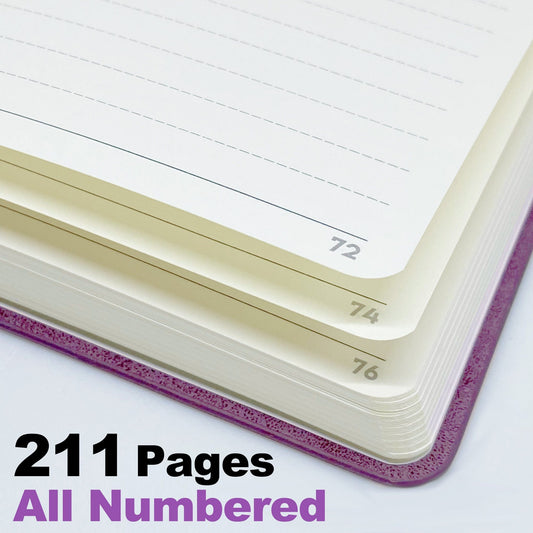
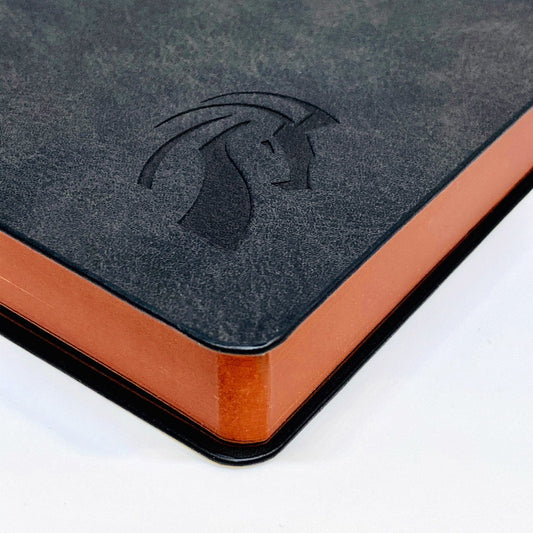
The binding is sewn, not glued. A glued spine cracks after a few months of heavy use. A sewn binding flexes and lasts. I have dropped my LeStallion notebook, stuffed it into a backpack, and carried it through rain. The cover shows some wear, but the binding is as tight as day one. That durability is essential if you treat your notebook as a working tool, not a desk ornament.
Layout Options That Match How You Work
One size does not fit all. LeStallion offers several interior layouts: dot grid, lined, blank, and a structured daily layout. I use the dot grid for most of my work because it gives me the freedom to sketch diagrams, write lists, and draw tables without lines getting in the way. For project planning, the daily layout with a timeline on the left margin helps me block out my day without overcommitting to a strict hourly schedule.
Here is a quick comparison of the layouts and what they suit best:
- Dot grid - Best for mixed use: notes, sketches, diagrams, and lists. My personal favorite.
- Lined - Ideal for long-form writing, journaling, or anyone who needs straight lines to keep handwriting legible.
- Blank - Great for artists, mind mapping, or anyone who hates any kind of constraint.
- Daily layout - Designed for time-blocking, task management, and structured productivity systems.
Each layout comes in A5 or B5 size. A5 fits in most bags and is easy to carry everywhere. B5 gives you more writing space per page, which I prefer when I am working through complex problems.
How the Notebook Fits Into a Productivity System
I use a modified version of the Bullet Journal method. Every morning I open my LeStallion to the daily page, write the date at the top, and list my top three priorities for the day. Then I do a rapid brain dump of any tasks, ideas, or worries that are floating around in my head. Getting them onto paper clears mental clutter and lets me focus on what matters.
The index at the front lets me tag each brain dump with a page number. Later, when I need to revisit a project idea from two weeks ago, I flip to the index, find the page, and there it is. No digital search needed, no distraction from notifications. Just the idea, exactly as I wrote it.
I have heard from other users who use the notebook for specific workflows: software developers sketching out architecture, writers planning chapters, students taking lecture notes. The common thread is that the notebook does not dictate the method. It supports whatever method you bring to it.
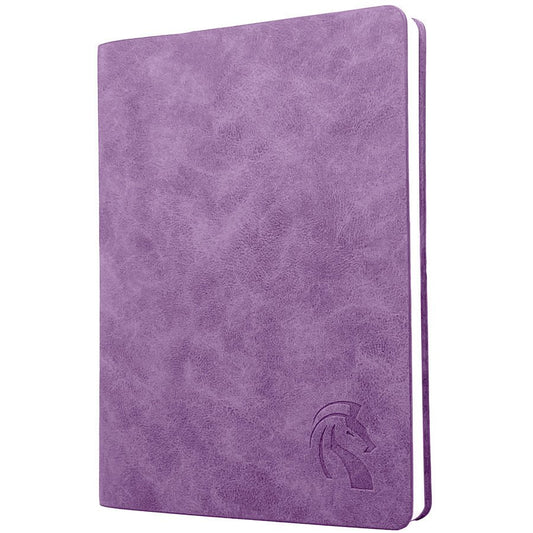
Why the Best Writing Notebooks from LeStallion Stand Out
After testing so many notebooks, I have come to appreciate the small details that make a big difference. The page numbers are printed, not something you have to fill in yourself. The bookmark ribbon is stitched in, not glued, so it does not fall out. The back pocket holds loose papers or business cards. None of these features are revolutionary on their own, but together they create a tool that disappears into your workflow.
The phrase Best writing notebooks from LeStallion has become my shorthand for a notebook that respects your time and your thinking. It does not try to be a productivity guru. It just gives you a clean, durable, well-designed space to do your best work.
Trade-Offs and Honest Considerations
No notebook is perfect for everyone. LeStallion notebooks are priced higher than basic composition books. You are paying for the paper quality, binding, and thoughtful layout design. If you are someone who fills a notebook once and then never looks at it again, you might not need the index or the durable binding. A cheaper option would serve you fine.
Another consideration: the daily layout has pre-printed sections for time and priorities. If you like to design your own spreads from scratch, the dot grid or blank versions give you more freedom. The daily layout works best if you follow a structured system like the original Bullet Journal method or a time-blocking routine.
The paper is white, not cream. Some people prefer a warmer tint for reading comfort. I find the white paper makes my notes easier to scan quickly, but it is a matter of personal preference. LeStallion does offer a cream paper option in some editions, so check the product details before you order.
Who Should Buy One?
If you write regularly, whether for work, study, or personal growth, a quality notebook pays for itself in the clarity it brings. The Best writing notebooks from LeStallion are especially suited for:
- Professionals who use a notebook for daily planning and meeting notes.
- Writers and creatives who need a reliable space for brainstorming and drafting.
- Students who want a durable notebook that lasts an entire semester.
- Anyone who has tried digital productivity tools but misses the focus that comes from writing by hand.
If you fall into one of these groups, I recommend starting with an A5 dot grid. It is the most versatile size and layout. Use it for two weeks. Fill the index, write every day, and see if the structure helps you think more clearly. I suspect it will.
Final Thoughts
A notebook is a simple tool, but the right one can change how you work. LeStallion has put real thought into the details that matter: paper that can take any pen, binding that lasts, and a layout that supports your system instead of replacing it. That is why I keep coming back to it, and why I recommend it to anyone who asks about my daily carry.
If you are looking for a notebook that will sit on a shelf and look pretty, there are cheaper options. But if you need a tool that will help you think, plan, and create every single day, the Best writing notebooks from LeStallion are worth the investment.